Shandia Signature Font Review: A Premium Script for Creative Branding
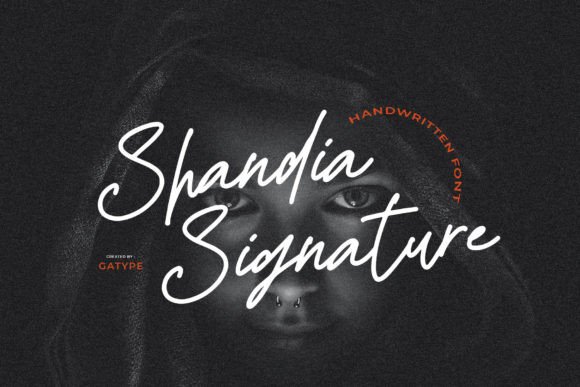
I recently had the chance to test Shandia Signature, a Script Handwritten font, in a boutique branding project. As a brand designer who’s worked with dozens of Fonts, I can confidently say that this one stands out—not just for its beauty but for how it elevates real-world design applications. Whether you're designing a logo, crafting packaging mockups, or building a brand board, Shandia Signature brings an elegant and personal touch that’s hard to ignore.
Shandia Signature for Logo Design and Brand Identity
One of the first places I tried Shandia Signature was on a logo draft for a local artisanal soap company. The goal was to create something warm, inviting, and handcrafted—perfect for a Script Handwritten typeface. What surprised me was how clean and structured the font felt despite its organic nature. It’s not the kind of script that gets lost in flourishes; each stroke is intentional and refined.
In my experience, many Fonts in the script category struggle with consistency across different weights or spacing. But Shandia Signature handles these nuances well. When placed next to a minimalist sans serif like Montserrat, it added a luxurious contrast without clashing. This balance is key in creating a strong brand identity where personality meets professionalism.
Using Shandia Signature in Packaging Mockups and Product Labels
Next, I applied Shandia Signature to a packaging mockup for a small-batch candle line. The label needed to feel exclusive and high-end, and the font delivered exactly that. Its detailed curves and slightly calligraphic style gave the product a sense of craftsmanship and attention to detail. In print, the font retained clarity even at smaller sizes, which is impressive for a Script Handwritten design.
What makes Shandia Signature particularly useful here is its adaptability. For instance, when used as a headline on a box, it commanded attention while still being legible enough for short taglines. I also noticed that the included alternates and ligatures allowed for subtle customization, making the label feel more bespoke rather than generic.
Shandia Signature on Business Cards and Printed Materials
For printed materials like business cards and brochures, I found Shandia Signature to be incredibly versatile. On a card with a muted color palette, the font stood out beautifully. I paired it with a simple serif like Lora for body text, which kept things readable while letting the script shine where it mattered most—the name and tagline.
It’s worth noting that while Shandia Signature is perfect for headlines and accents, it’s not ideal for long paragraphs or dense content. But in a business card context, that’s not a problem. Instead, it adds to the font’s charm—it feels like a signature, not a block of text.
Shandia Signature in Social Media Graphics and Web Headers
Social media layouts are another area where Shandia Signature really shines. I used it in an Instagram post for a handmade jewelry brand, and it immediately conveyed the right tone—elegant yet approachable. The font’s character set supports multilingual characters, so if your audience spans multiple regions, that’s a big plus.
On the web, I tested it in a homepage hero section using Google Fonts and then with a custom embed. The rendering was smooth, and it looked great at both 48px and 64px. While it’s definitely a display font, it doesn’t suffer from pixelation or loss of detail when optimized correctly. That said, always test it on your specific site before going live—different browsers and devices render Fonts differently.
Shandia Signature as a Supporting Typeface in Editorial Design
In editorial work, I often use script fonts sparingly to highlight quotes or pull lines. With Shandia Signature, I was able to integrate it into a blog layout as an accent heading. It didn’t overwhelm the design, and when combined with a modern sans serif like Open Sans, it created a fresh yet classic aesthetic.
One thing I appreciated was how well it scaled down for smaller headings. Unlike some overly ornate Script Handwritten fonts, Shandia Signature maintains its elegance even in tighter spaces. This makes it suitable for flyers, posters, and other print-on-demand materials where visual impact is crucial.
Practical Tips for Working with Shandia Signature
- Test it in context: Always apply the font to real design assets—like a shop sign or a social media graphic—to see how it behaves under different conditions.
- Use it as a display font: Because of its intricate details, Shandia Signature works best in headlines, logos, and short phrases rather than large blocks of text.
- Check licensing: If you plan to use it in client work, especially for packaging or digital products, make sure to review commercial font licensing terms. Some scripts come with restrictions, and it’s better to know upfront.
- Pair carefully: Try pairing it with a neutral sans serif or a classic serif to keep your designs balanced. Avoid combining it with too many decorative Fonts unless you’re going for a vintage or artistic vibe.
When Not to Use Shandia Signature
While Shandia Signature has a lot going for it, there are scenarios where it might not be the best fit. For formal corporate identities, especially those requiring strict visual hierarchy and readability, a more straightforward Font would serve better. Similarly, avoid using it in long-form copy—its flourish-heavy nature isn’t built for endurance in body text.
Also, consider the size and medium. While it looks fantastic in print and digital headers, it may not hold up in very small sizes on screens, like mobile menus or tiny icons. Always zoom in during testing to ensure legibility at all scales.
Final Thoughts on Shandia Signature for Creative Projects
After several weeks of working with Shandia Signature, I’m impressed by how it enhances creative projects—from logo design to packaging design. It’s a premium font that feels hand-crafted but remains professional. If you're looking for a Script Handwritten typeface that adds a touch of sophistication to your Fonts collection, this is a solid choice.
But remember, no font is a silver bullet. Take time to test it in your workflow and ensure it aligns with your brand's voice. Once you find the right spot for it, Shandia Signature will become a go-to asset in your toolkit.